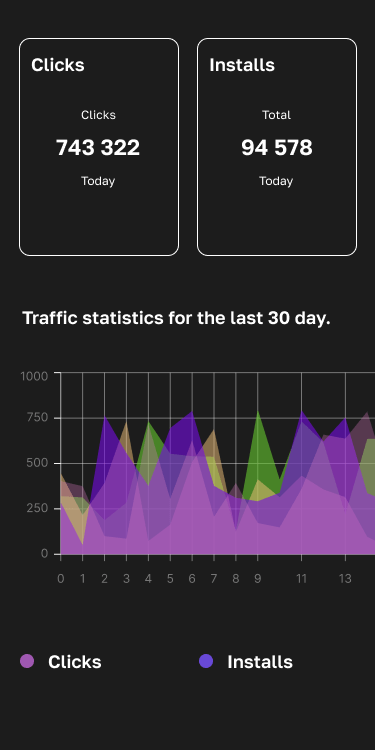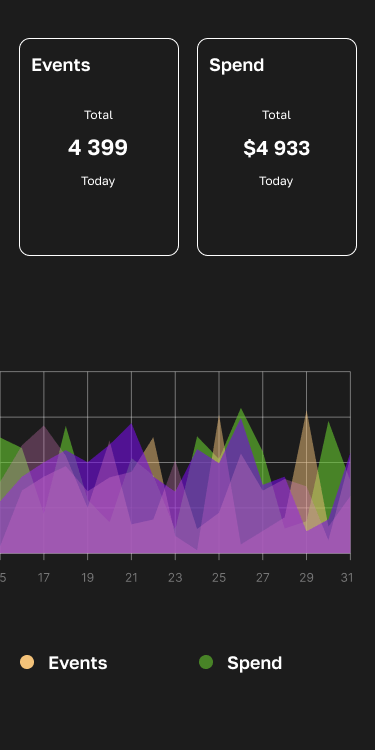


Mobile growth in 2025 is defined by two forces that increasingly shape how apps scale: the continued dominance of in-app advertising and the rapid rise of OEM traffic from device manufacturers like Xiaomi, Huawei, and Vivo. Together, they form the most powerful and predictable foundation for sustainable user acquisition. With both ecosystems now converging into unified platforms like Qi Ads, advertisers can reach high-intent audiences, optimize toward real outcomes, and navigate a market that demands transparency and efficiency.
The Scale of In-App Advertising: Still the Engine of Mobile Growth
Sensor Tower’s global app economy analyses consistently show that mobile behavior is not plateauing, it’s accelerating. According to their recent data:
- Users spend 4.2 trillion hours in mobile apps.
- Annual consumer spending across iOS and Android exceeds $150 billion.
This level of engagement positions in-app environments as the largest attention channel in digital media.
In-app advertising remains one of the most effective ways to acquire users:
- On average, every $100 in in-app ad spend generates 37 paid installs.
- Additionally, in-app visibility contributes to 3 incremental organic installs, confirming the well-documented paid–organic uplift effect.
Industry studies from AppsFlyer, Branch, and Adjust reinforce the same conclusion: in-app UA generates measurable downstream value, especially when combined with machine-learning optimization and event-based bidding.
The Rise of OEM Traffic: The Fastest-Growing User Acquisition Channel
While in-app ads continue to scale, OEM advertising is expanding even faster, especially in markets where Android manufacturers control significant distribution power.
Multiple independent industry reports confirm that:
- OEM ecosystems – including Xiaomi GetApps, Huawei AppGallery, Vivo V-Appstore, and OPPO/realme’s marketplaces, are becoming dominant alternative distribution channels.
- By the end of 2025, up to 40% of all app installs in EMEA and MENA are expected to come from OEM channels.
This shift is enabled by three major factors:
1. OEM inventory reaches the user at the device level
Preloads, setup-wizard recommendations, browser placements, smart folders, and branded app stores provide native discovery points that outperform traditional ad placements.
2. OEM channels bypass noisy auctions
Unlike saturated in-app networks, OEM inventory has lower competition and more predictable pricing.
3. OEM ecosystems are strong where Google Play has coverage gaps
Across developing markets: Middle East, Africa, South Asia OEM stores frequently serve as the primary app distribution environment.
As a result, brands expanding globally can no longer rely solely on traditional networks. OEM traffic is becoming essential infrastructure for any UA strategy that targets growth regions.
Climax: The Two Worlds Converge
In-app and OEM were once separate channels requiring different partners, integrations, and optimization strategies. But advertisers today want:
- clear analytics
- predictable cost structures
- outcome-based buying
- consolidated performance data
- automated machine-learning optimization
This convergence is where modern platforms provide the most value.
Qi Ads Brings OEM and In-App Traffic Together
Qi Ads is built for the new era of mobile marketing, an era where advertisers demand both scale and precision.
By combining in-app inventory with OEM channels inside a single performance-driven ecosystem, Qi Ads delivers:
✔ Unified access to high-intent users
Across in-app networks and OEM ecosystems from leading manufacturers.
✔ Transparent analytics
With clear reporting on how each supply source contributes to installs, registrations, purchases, and ROAS.
✔ Machine-learning optimization
Reducing manual workload and optimizing automatically toward business outcomes, not just impressions or clicks.
✔ Performance-based pricing models
Advertisers pay for actions that matter: installs, registrations, purchases, retention events.
In short:
Qi Ads transforms fragmented UA channels into a single, predictable engine for growth.
Resolution: The Two Pillars of Growth Are Stronger Together
The future of mobile acquisition is not about choosing between OEM or in-app, it’s about integrating both intelligently.
- In-app advertising delivers scale, global reach, and proven performance mechanics.
- OEM traffic delivers native visibility, lower saturation, and rapid acceleration in emerging markets.
Together, they form the two pillars of sustained mobile growth and platforms like Qi Ads make it possible to unlock their combined power through one performance-focused system.