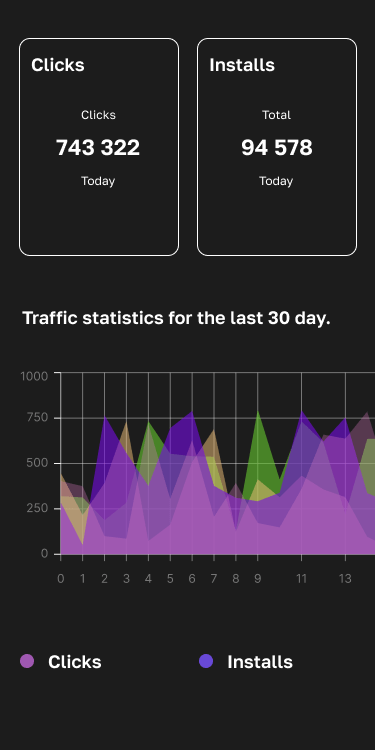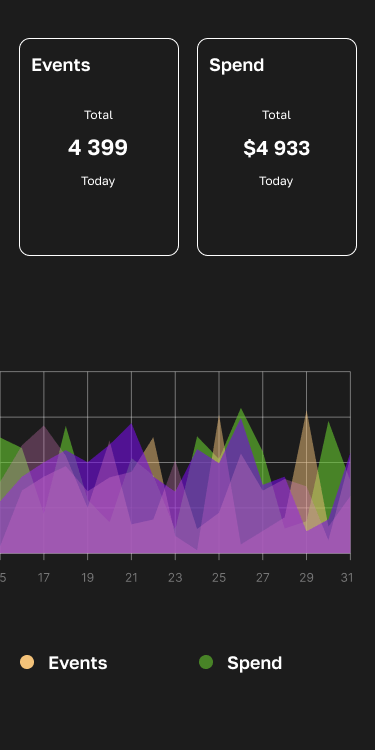


For years, mobile user acquisition was judged by one primary metric: installs. High install volume meant growth. Low CPI meant efficiency. But in 2026, that logic feels outdated.
In today’s fragmented in-app and OEM ecosystem, the real competitive edge lies in post-install signal quality, not install quantity.
Why Install Volume Is No Longer Enough
Modern mobile advertising runs across SDK networks, SSPs, OEM ecosystems, aggregators, and hybrid buying platforms. Each supply source has different traffic characteristics, auction dynamics, and audience intent.
When campaigns scale across fragmented supply paths, install volume alone becomes misleading.
Two campaigns may deliver identical CPI and install numbers, yet produce radically different outcomes in:
- D1 and D7 retention
- purchase rate and subscription start
- KYC completion or funded account
- early ROAS and predicted LTV
In a performance-driven environment, post-install events are the only reliable proxy for real business value.
The Problem with Shallow Signals
Low-quality traffic often looks healthy at the top of the funnel. Click-through rate can appear strong. Installs may be inexpensive. Early conversion rates can even seem acceptable. The issue emerges deeper in the funnel.
If retention drops after day one, if in-app events fail to trigger consistently, or if payer conversion lags behind benchmarks, the true cost of acquisition increases dramatically. A cheap install with weak downstream behavior ultimately inflates blended CAC.
That is why advanced UA teams in 2026 optimize toward value-based events such as purchase, subscription activation, D7 ROAS, and retention milestones, rather than focusing on raw CPI.
How Aggregators Are Changing Budget Allocation Logic
The rise of traffic aggregators has introduced a structural shift in mobile performance marketing.
Unlike single SDK networks, aggregators unify multiple in-app networks and OEM placements under one optimization layer. This changes how budgets are distributed across supply sources.
Instead of manually shifting spend between networks based on install cost, modern platforms use machine learning to evaluate:
- predicted lifetime value
- early event velocity
- post-install conversion depth
- retention stability across device cohorts
Budget allocation becomes dynamic. Traffic sources that generate stronger downstream signals receive more spend. Sources that deliver shallow engagement are deprioritized, even if their CPI appears attractive.
This logic reduces dependence on any single SDK network or OEM ecosystem. It also improves blended ROAS by aligning spend with measurable value rather than surface-level metrics.
Why Signal Quality Is a Competitive Advantage
As privacy frameworks evolve and identity signals become more constrained, high-quality post-install data becomes even more valuable.
Clean event pipelines, accurate attribution through MMP integrations, and consistent reporting across in-app and OEM channels enable:
- faster optimization cycles
- more stable CPI control
- improved scaling efficiency
- reduced exposure to fraudulent or low-intent traffic
In a fragmented mobile advertising environment, signal clarity becomes a strategic asset.
The 2026 Reality for UA Teams
The question is no longer “How many installs did we buy?”
The question is “How many valuable users did we acquire?”
Post-install signal quality determines:
- how confidently campaigns can scale
- how accurately LTV can be predicted
- how effectively machine learning models allocate spend
- how resilient performance remains across volatile auction conditions
In 2026, install volume is a vanity metric. Signal quality is the growth metric.