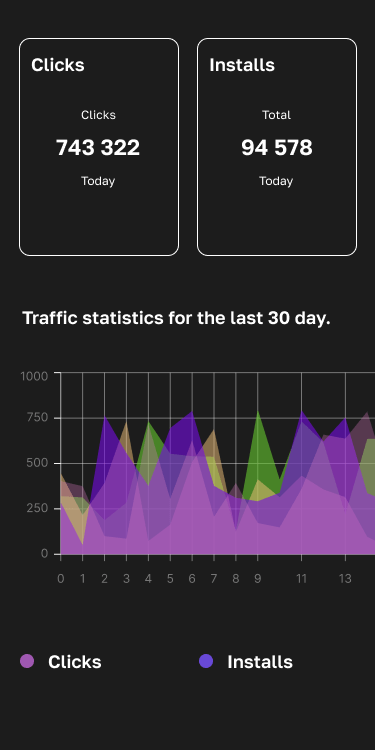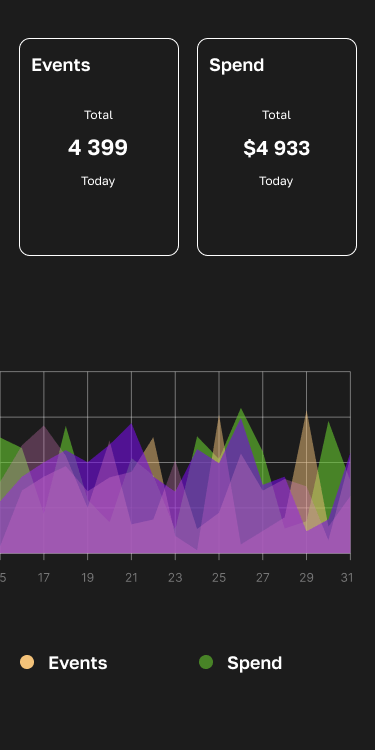


Over the past year, digital advertising has experienced another wave of structural change. As Privacy Sandbox timelines shifted and browser-based attribution models faced uncertainty, performance marketers were forced to re-evaluate risk. In that environment, one channel quietly regained strategic importance: in-app advertising. This is not about hype. It is about stability.
The Attribution Gap on the Web
Web advertising is entering a new phase of fragmentation. Identity solutions remain inconsistent, cross-site tracking is limited, and measurement depends increasingly on modeled data. For UA teams focused on predictable ROAS, CPI control, and measurable post-install events, this introduces volatility.
Budget allocation follows confidence. When tracking becomes uncertain, optimization cycles slow down. When optimization slows down, scale becomes expensive.
In contrast, mobile in-app user acquisition continues to operate within a relatively structured framework. Measurement through MMP integrations, deterministic install tracking on Android, SKAN-based modeling on iOS, and clean post-install event pipelines still provide actionable signals for campaign optimization.
For growth teams, that difference matters.
Why In-App Stability Feels Safer in 2026
There are three practical reasons budgets are flowing back into in-app advertising:
1. Clear Install Attribution
Even under privacy constraints, in-app installs remain measurable. UA managers can optimize toward events such as registration, purchase, subscription start, or D7 ROAS.
2. Performance-Oriented Buying Models
Unlike web display ecosystems, in-app traffic frequently supports CPI, CPA, and value-based bidding. This aligns spend directly with business outcomes rather than impressions alone.
3. Faster Feedback Loops
In-app campaigns typically generate enough signal volume to allow optimization within 48 to 72 hours. For performance marketing teams, that speed translates into lower learning costs and tighter CAC control.
Media Mix Rebalancing
What does this mean for UA strategy?
In 2026, many teams are shifting toward a hybrid allocation model:
- Social networks remain essential for scale and algorithmic discovery.
- In-app advertising becomes the stabilizer that protects blended ROAS.
- OEM and on-device placements are tested as incremental growth levers.
Instead of chasing reach, teams are optimizing for predictable cost per acquisition, retention-driven LTV, and controlled scaling. In other words, in-app traffic is not replacing social channels. It is absorbing risk.
Strategic Implication for UA Managers
The competitive advantage is no longer access to traffic. It is access to stable, measurable traffic.
Platforms that combine:
- diversified in-app inventory,
- machine learning optimization,
- real-time analytics,
- and fraud protection
For UA teams operating in a privacy-first world, stability has become a performance metric.
In-app advertising is no longer simply another acquisition channel. In the post-Sandbox environment, it is becoming the operational backbone of scalable mobile growth.