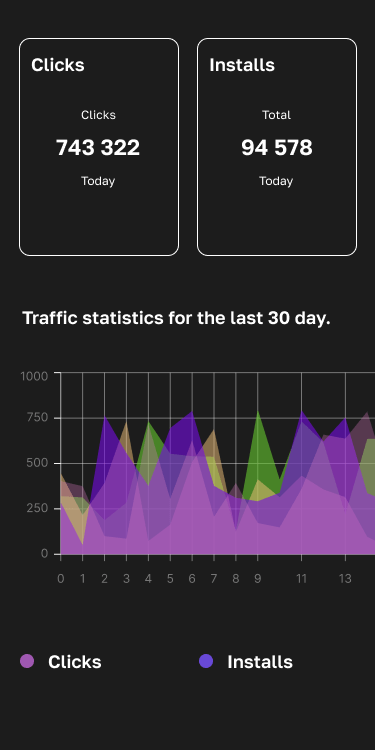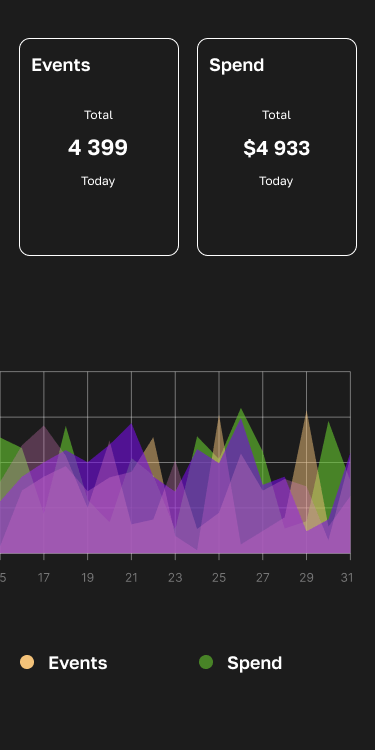


In modern mobile user acquisition, attribution is no longer a technical afterthought. It is the layer that decides which channels scale, which get cut, and which are mistakenly labeled as “inefficient.” Mobile measurement partners remain central to UA decision-making, but in practice, performance often suffers not because of traffic quality — but because attribution is configured incorrectly. Poor postbacks, shallow event mapping, and misaligned attribution windows distort reality and lead to wrong budget decisions.
Why “Basic Integration” Is No Longer Enough
For a long time, integrating an MMP meant doing the minimum:
- SDK installed
- install tracked
- basic postback enabled
That was enough when:
- CPI was the main KPI
- funnels were short
- attribution windows were generous
- privacy constraints were weaker
Today, this setup is insufficient.
UA teams now operate across:
- in-app traffic
- OEM ecosystems
- programmatic DSPs
- multiple geos and devices
At the same time, optimization has shifted from installs to post-install value. This exposes a hard truth:
if attribution is not aligned with how traffic actually converts, performance data becomes misleading.
Where Attribution Usually Breaks First
Before talking about best practices, it is important to understand the most common failure points.
Typical Attribution Failures
| Problem | What It Causes |
| Install-only tracking | Channels optimized for volume, not value |
| Missing early events | No signal for CPA or LTV optimization |
| Incorrect attribution windows | Over- or under-crediting traffic sources |
| No differentiation by placement | Inability to see which inventory actually works |
| Last-click bias | Systematic underinvestment in upper-funnel and OEM traffic |
These issues rarely look dramatic in dashboards — but over time, they quietly redirect budgets away from high-impact sources.
The Shift: From Install Attribution to Funnel Attribution
High-performing UA teams no longer think in terms of “does this source bring installs.”
They think in terms of funnel contribution.
Best-practice integrations with platforms such as AppsFlyer, Adjust, Branch, or Singular are built around a clear event hierarchy.
Event Hierarchy That Actually Works
| Funnel Stage | Purpose |
| Install | Entry point only |
| Registration / onboarding | Intent confirmation |
| First key action | Early quality signal |
| Purchase / subscription | Monetization proof |
| Retention milestone | Long-term value signal |
This structure allows traffic sources to optimize beyond CPI toward CPA and value-based outcomes.
The Climax: How Proper Attribution Unlocks Real Performance
When attribution is configured correctly, three critical things happen.
1. Traffic Sources Start Optimizing for the Right Users
Performance traffic sources — whether in-app or OEM — can only optimize based on the signals they receive.
If you only send install postbacks:
- the system learns how to generate installs
- not how to generate customers
When early and mid-funnel events are passed correctly:
- low-intent traffic is filtered automatically
- bids shift toward placements that drive real actions
- CPA stabilizes even as scale increases
This is the difference between “traffic that converts” and “traffic that looks good in reports.”
2. OEM and In-App Traffic Become Comparable
One of the biggest practical problems for UA managers is comparing OEM traffic with in-app sources.
Without proper attribution:
- OEM traffic often appears weaker due to assisted or organic attribution
- in-app traffic captures last-click credit
With consistent event tracking:
- cohorts can be compared on retention and monetization
- true incrementality becomes visible
- budget decisions move from opinion to evidence
Attribution does not make channels equal — but it makes them comparable.
3. Budget Allocation Becomes Predictable
When attribution reflects the real funnel, scaling becomes safer.
UA teams gain:
- confidence to increase budgets on slower-converting channels
- clarity on where CPI is misleading
- early warnings when quality degrades
Instead of reacting to short-term fluctuations, teams manage performance through cohort behavior and event progression.
Practical Integration Principles UA Teams Should Follow
Attribution Best Practices Checklist
| Area | Practical Recommendation |
| Event mapping | Track early, mid, and revenue events |
| Postbacks | Send events in real time where possible |
| Attribution windows | Align windows with user decision cycle |
| Placement-level data | Separate performance by inventory |
| OEM traffic | Evaluate via cohorts and incrementality |
| Reporting | Focus on trends, not single-day metrics |
Reliable measurement is not about having more data.
It is about having the right data connected to real business outcomes.
The Resolution: Attribution as a Growth System, Not a Reporting Tool
For UA managers and advertisers, attribution should no longer be treated as:
- a checkbox in onboarding
- a reporting layer for finance
- a technical dependency owned by engineers
It is a strategic system that defines:
- which channels scale
- which experiments survive
- how risk is distributed
- how confidently budgets grow
When attribution is aligned with funnel reality, performance traffic sources work as intended.
When it is not, even high-quality traffic will look inefficient.
Final Thought
Good traffic does not fail silently. Bad attribution makes it look like it does.
Integrating mobile attribution platforms correctly is not about precision for its own sake — it is about creating a measurement foundation that allows in-app and OEM traffic to compete fairly, optimize intelligently, and scale sustainably.
For experienced UA teams, this is no longer optional. It is the baseline for growth.